Sunday, March 22, 2020

Locked Down

Pixabay
We find ourselves locked in, locked down, and locked out these days because of the COVID-19 pandemic making its way across the world. Someone posted a photo on FACEBOOK this morning that reminded me of someone else who was also locked in, locked down, and locked out. His story should be an encouragement to us to be "locked onto" God Himself during these days. The short meditation that follows comes from Divine Design for Daily Living. 

“Then the Lord shut him in.” Genesis 7:16b NIV.

         There is a world of security in these wonderful words: “Then the Lord shut him in.” God personally locked Noah and his family in. People who ridiculed Noah for building a boat where there was no water weren’t laughing anymore. They were on the outside — and it was beginning to rain. People who had persecuted him for preaching to them about God’s coming judgment on their sins were beginning to feel the slipping and sliding of wet ground underfoot.   
         “…the Lord shut him in.” Safe. Secure. Splat. Nowhere are we told that either the animals or the humans in the ark ceased to have all the normal needs that animals and humans have. They still had to eat, drink, and exercise their bodily functions. I wonder if Noah ever wished that the Lord hadn’t shut him in? Who fed the animals? Who changed the straw? Who shoveled the manure? On the other hand, short of a marathon swim, Noah didn’t have any other options. But that year of being shut in must have had moments when Noah wondered: “Why me, Lord?” 
         Being “shut in” by God has a wonderful, highly spiritual sounding tone to it. Who hasn’t longed for that perfect quiet time “shut in” with God. But, even such an intimate time can get painful and troublesome. When God speaks in those moments alone with Him, it might just as often be to kick us in the backside as it is to pat us on the back.
         When God shuts us into a particular circumstance, no matter how complicated, fearsome, or wearisome, the journey gets, we can relax in the knowledge that our ark won’t leak, reek or creak, except to bring Him glory and to benefit us. 
         There were challenges to be faced in Noah’s floating water world, but having done “all that the Lord commanded him” (7:5), having had the door locked behind him by the hand of none other than God Himself, Noah could have had nothing but confidence that this unusual, impossible voyage would end well.

Remember:
What God shuts in, He also always lets out.

Monday, December 9, 2019

The Worker In Wood

Pixabay
Lovingly, he caressed the smooth surface of the oak. He had carefully cut it, shaped it, and planed it until it lay finished before him—the most beautiful cradle. It was fit for a king.

Joseph remembered the stories of old, the story of Abraham sitting under the great oaks at Hebron when the Lord appeared to him. Joshua had prepared a memorial stone and placed it under an oak near the holy place to mark the covenant between Israel and God. An angel had presented himself to Gideon seated beneath an oak. Absalom had met judgment under an oak. Israel’s history was rich in references to the mighty tree.

And now, this particular piece of oak would cradle the Son of God.

Joseph suffered a moment of doubt. The Son of God? Was any cradle he could make, a lowly worker in wood, worthy of God, the King of kings and Lord over all?

But that appeared to be the plan. He’d never forget the appearance of the angel, assuring him that Mary had told the truth—the child growing within her was God’s Son, the Messiah, the Promised One. And he, the carpenter from Nazareth, was pledged to her as husband.

He brought his best skills to the table. It was all he could offer this coming King. It was all he had.

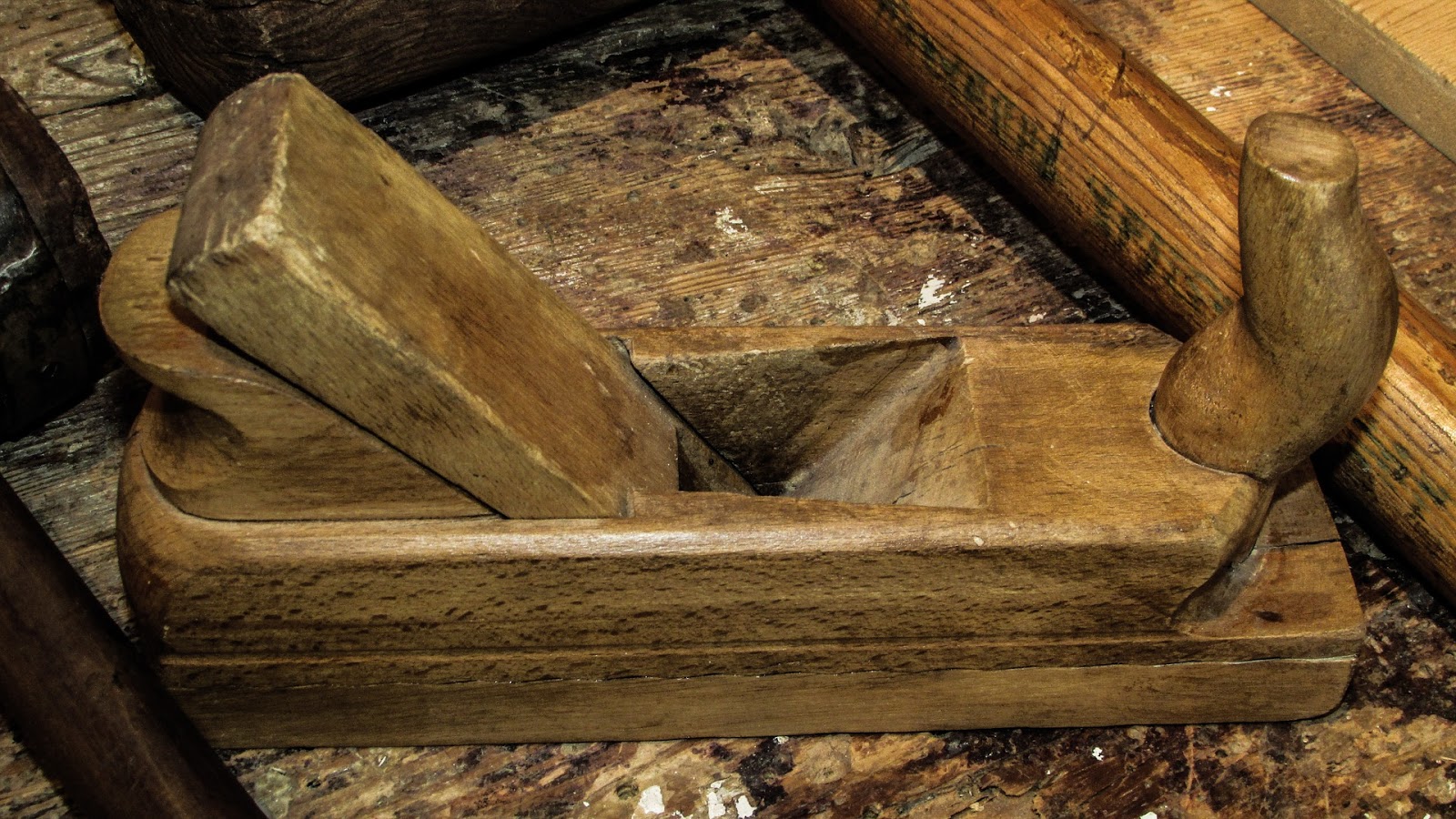
Joseph touched the wood again, running his hands over every piece, every join. He searched carefully for any flaw, any mark, any roughness that required a touch from the plane that was in his expert hands.

The great tree from which the carpenter had taken this piece of wood would renew itself. It would put out new roots and, with time, grow strong again. He remembered the prophet’s words: “But as the terebinth and oak leave stumps when they are cut down, so the holy seed will be a stump in the land.”*

That last phrase sent a shiver down his spine. Would this holy seed, God’s Son who was about to be entrusted to his care, be cut down as he had cut down the oak tree to make this cradle? What had the prophet meant?

One thought connected to another, divinely linked. As Joseph ran his hands over the wood, he also recalled another prophecy. “A shoot will come up from the stump of Jesse; from his roots a Branch will bear fruit. The Spirit of the Lord will rest on him—the Spirit of wisdom and of understanding, the Spirit of counsel and of power, the Spirit of knowledge and of the fear of the Lord—and he will delight in the fear of the Lord…In that day the Branch of Jesse will stand as a banner for the peoples, the nations will rally to him, and his place of rest will be glorious.”**

This was a conundrum to be solved by more astute minds than his. He had best stick to what he, the carpenter, knew for sure—how to work the wood.

However, just as few days later, the cradle was forgotten. The order had been posted. Every Israelite was to return to his birthplace to register. It was a Roman command and impossible to ignore. Mary was close to her time. They would never be able to get back to Nazareth for the birth of the child, and there was no way to take with them the cradle that Joseph had poured his soul into. Who knew what awaited them in Bethlehem, what sort of bed would receive this King? Who knew how long they would have to linger there?

At first Joseph was angry. He had worked so hard. It wasn’t fair! Then he felt disappointment. The beauty that his skill had produced might never hold close the tender and tiny Person Who would someday rule the nations. Later, fear crept in. Had Yahweh rejected his gift, and his skill, as unworthy?

As he pulled the door to his workshop closed, the carpenter looked back at the masterpiece sitting abandoned on the workbench. Another thought collided with, and then overtook, his anger, disappointment, and fear.

The oak was also a place of worship for the pagan nations, he mused. Perhaps I have thought too much about the beauty of the cradle and valued it too highly. Perhaps I thought too much about the skill that produced it. Perhaps the cradle of oak was appreciated, but never necessary. Perhaps all Yahweh ever wanted was for me to say “Yes” to becoming step-father to a King.

Released, Joseph closed the door and turned his steps, and his heart, toward Bethlehem. As he and Mary passed by it, he noticed that the oak from which the cradle had been born was already showing signs of life. It was enough.

*Isaiah 6:13. **Isaiah 11:1-3, 10.

Monday, September 9, 2019

Long-Awaited Answer

Stella pulled the letter from the narrow box in the lobby. The envelope was wrinkled and yellow. One corner, with a ragged semi-circle outlined in a thin faint gray, showed evidence of water damage.

After weeks of nothing but bills and slick, shiny promotional materials advertising pizza delivery, phone bundles, and cable deals, this thin missive looked like a pleasant diversion.

Miss S. Abrahamsonwas written in a boyish hand in the center. But the address was wrong. As her eyes travelled down the yellowed paper Stella realized that she didn’t recognize the name of the street, or the town. Both the address and the name of the town had been crossed out. Someone had handwritten “doesn’t live here” in pinched, crab-like letters. 

There was no return address.

Stella knew enough about the post office to be fairly certain that, under normal circumstances what she held in her hands should have ended up where all the dead go—the round file.

But here it was.

The stamp was green. She looked carefully at it. It was worth thirteen cents and had an engraving of a tank on it. When was the last time stamps had their monetary values printed on them? And who ever heard of a thirteen-cent stamp? And a tank? Then she noticed the postmark, faded almost to extinction. Halifax, N.S. 1943.

Stella was twenty-seven. She was Miss S. Abrahamson—with both feet on the ground and no illusions about voices, or letters, communicating with her from the great beyond, or the far distant past.

She turned the letter over and gently eased back the flap. There was a single sheet of thin paper inside. The stationery, like the envelope, was wrinkled and yellowed.

A thousand thoughts twisted and turned through Stella’s mind. This obviously wasn’t her letter, despite the name on the envelope. Perhaps she had no business opening it. But it was now open so…

Dear Stella,

I have to get this into the bag right away. The convoy is about to sail and of course, they don’t tell us ordinaries where we’re going, when we might make port, or when we’re coming back. 

I’m so sorry we didn’t have hardly any time together before I had to shove off. But I want you to know that you’re the only girl in the world for me and I love you, love you, love you. Don’t run off with anyone else while I’m gone. 

Will write again as soon as I can.

God bless you and keep you safe for me,

Tommy

Stella carefully folded the letter, put it back in the envelope and returned to her apartment. She went into her bedroom, slid open the closet door and pulled out an old suitcase that had belonged to her parents. It was stuffed with old photos and memorabilia that she had kept when the family home had been broken up and sold after her parents’ tragic car accident.

She rummaged through bits and pieces long forgotten. But there was one photo that had stitched itself into her memory. The letter had torn that memory loose and dragged it to the forefront of her mind. Finally she found it.

Her great-aunt, Stella Abrahamson.

In the photo, that Stella was standing in the apple orchard of the homestead that had once belonged to the family. Alongside her stood her brother, David, and his wife, Millie. In Millie’s arms was a baby, Max.

Max had named his daughter after his favourite aunt.

“She was an amazing woman. In those days all the girls got married, People thought you were somehow lacking if you didn’t. She never said why. But something broke her heart and it never healed so she bundled up the pieces as best she could, straightened her shoulders, and took on the world by herself. Always admired that in her.”

Where had the letter been all these years? How did it finally find its way to a Stella Abrahamson, even if it was the wrong one? Had the first Stella believed that Tommy had just sailed away from her to find another girl in another port?

Stella found the most important answer after a long night of research. Only two merchant ships were lost in 1943. Ordinary seaman, Tommy Scott, died when the Jasper Parkwas torpedoed in the Indian Ocean on the 6th of July.

Later that week, Stella leaned over the bedside of an elderly lady and whispered, “Auntie, Tommy loved only you to the end.”

Tuesday, August 27, 2019

Nine Word Sentences

Courage is often measured by risk. It takes courage to live out God’s Truth. The firm, unscalable walls of God’s absolutes are not gratefully embraced. To be the weakest flame of Truth shining in the midst of blackest deception requires the greatest courage. Accepting the possibility of rejection, misunderstanding, and even aggression, requires a risk-taker. His Truth is counterculture, uncomfortable, and razor-sharp. I submit to its Divine cuts and cures in my own life, and stand up for it in a world that prefers its own lies.

Hope is the expectation that what I say, and write, will find its way through the maze of fear, anger, disappointment, doubt, and rebellion that is in us all. Within me lies the hope that the Spirit of God will penetrate those walls. I hope that His word is not sullied by mine. Only His can change anything and anyone. And always there is the hope that the words He plants will change me first.

Action follows direction, or desire. Procrastination is a soft bed and a beckoning pillow. It beguiles, promising a better day tomorrow. But it is the enemy of the mission. I will do what I promised God to do, not hastily, but neither laggardly nor lazily. I must do what He commands, obedience being the ultimate end of love. I will not wait for others—neither for their companionship on the journey, nor for their affirmation. I will take the steps He orders and speak the words He commands.

Leaning doesn’t come easily. The past necessitated independence and initiative—a product both of heredity and environment. Now, decades later, with habits entrenched, it is hard to rest in the Lord, on the Lord, because of the Lord, and trust Him to do His work in me. It is not a question of doing nothing but of abiding in Him and allowing the “being” to morph into the “doing” that will bring Him glory.

Listening for His voice among a myriad of other voices, including my own, might be the greatest goal of all. The world makes too much noise, as though more volume could overwhelm the sickness that eats the soul. Then comes the still whisper of the only voice that matters, the only sound that counts. He speaks, sometimes in volumes, sometimes just a word—JESUS. When peace ceases, when hate rules, when sadness overwhelms, I will listen for His voice. I will listen hard. 

Encouragement, even its smallest grain, spurs me on though I hesitate to seek it. Somehow that seems too self-centred. But as a plant needs water to thrive so does the soul need encouragement to blossom, to strive, to find meaning. It seems that every time I want to quit, God comes along and send me just a smidgen of “Keep going! Don’t be discouraged!” I am so slow to catch on, too easily distracted and too easily disheartened, too overcome by fear. But I take what He has repeated over and over again and hug those words close to my heart, plant them in my head, and fortify my resolve.

Nourishment to my soul is Your Word, O Lord! It satisfies even the deepest needs. Yet how little time I truly spend at feeding from the bountiful table that You have laid out. I nibble when I should gorge. I pick when I should finish a full plate. I turn my nose up at the servings I don’t particularly like, forgetting that they too are all part of the same dish of “Love Divine, All Loves Excelling.”* Make my hunger for You more acute that my hunger for anything else.

Grace takes me back to that spot on a hill where, shadowed by a cross, I am told everything I need to know. The debt is paid, the account is closed. I am forgiven. I am free to be everything His sufficient grace has designed for me. Grace lifts me onto my Father’s knee.

Excellence, not perfection, is the endgame. Perfection doesn’t happen here, but excellence does. I will do my best with all that He provides. I will do my best, not to bring myself glory, but to bring glory to Him by bringing others just one step closer to Him. I will strive for excellence because He is excellent. Though the brightness of my efforts amounts to the barest twinkle of the smallest star, I pray my life will be a reflection of His.

*Charles Wesley

Monday, November 20, 2017

Thirteen Reasons to Keep the Doors Open

Pixabay
While fog wept outside the door, the air hung heavy with regret inside the old church building. Of the dozen people gathered around the table, only one was male. However, not even the virtue of gender could make Thomas Stone a leader. Thomas breathed a sigh of relief when Cora Wilson called the meeting to order. As church clerk, Cora was the last, and highest, vestige of authority left. The pastor had departed in disgrace, leaving a decimated congregation in his wake.

Cora carefully explained the situation. She didn’t miss a miserable detail—which was why she was the church clerk. By the time she was done, it was painfully clear that the options were few.

“So, what do we do now?”

Matilda Manheim was 84. Faded blue eyes shifted slowly from one face to another, challenge written in every glance and punctuated by her terse words. She was a charter member of the congregation, had survived two world wars, the Great Depression, been widowed and left destitute at the age of 40, and still raised three fine sons on her own. Tillie wouldn’t give up without a fight—and she still had plenty of fight left in her despite her age.

“Maybe the denomination could help us out?”

This come from Sadie Waters, a quiet, tremulous voice that caused Matilda to crank up her hearing aid so that she could catch every word. Other voices answered.

“Fat help they’ve been. Wasn’t it them that insisted we pay the pastor a year of severance? Darn near broke the bank.”

“Yah, we got to show Christian love, which was more’n he showed us with all his high jinks.”

Cora could tell that the conversation was headed downhill—and quickly. There was still a lot of healing needing to be done. The wounds were still seeping.

“No use us crying over spilt milk. What’s done is done. We have to move on; to think about our future.”

“They could help us find a new pastor,” insisted Sadie.

Jane Stephens sighed, still smarting from the severance issue and her husband’s resignation some months previously from his position as treasurer and church member.

“Who’s going to come to a church with a dozen members left, most of them women, no money, and a rotten reputation in the community?”

Another nail smashed into place in the church’s coffin. In such a small town, news traveled fast. Months of conflict between pastor and people hadn’t stayed a secret for long, especially as members abandoned the battle to find peace in other places.

“Nothin’ wrong with women,” muttered Matilda.

“Nothing at all, Tillie. It’s just that none of us are wage earners, not even Thomas. Pensioners can’t carry the church.”

With great tact, Cora left out mentioning single mothers like Sadie, and women like Jane, who were financially dependent on their husbands.

Now there were lots of voices, all with problems, not a single one with solutions.

“Most of our best workers are gone. We need people, even one person would be an encouragement.”

“Preferably one who doesn’t know all the gory details.”

“Now you are asking for a miracle.”

This time it was Tillie who brought the group back to order.

“Are we saying that we close the doors of the church?” she demanded. “If one person can make the difference, God’ll deliver him. Did we lose our faith along with our pastor?”

The silence provided the answer to the question Tillie had left twisting in the cold wind of despair.

Suddenly the outer door swung open and a blast of moist air swept in, pushing an older man ahead of it. The stranger was decently dressed, but looking a little disheveled.

“I’m sorry to disturb you. My car broke down at the end of the lane. The fog is so thick that I feared getting lost while I went for help. I’m looking for 57 Birch Street.”

He laughed as he removed his hat.

“Imagine not being able to find your own house, but I just moved here. When I saw the light from the cross on your steeple I knew that God hadn’t abandoned this old retired preacher.”

The people seated around the table looked at each other in awe. For the first time, Thomas Stone spoke up:

“Welcome, Pastor. We’re what’s left of Bethlehem* Church.”

He turned towards Tillie.

“It looks to me like God might have just provided us with our baker’s dozen.**”


*Bethlehem means house of bread.
** A baker’s dozen is 13.

Friday, August 18, 2017

The Argument

Pixabay
The sounds come tumbling,
Cresting the tip of the tongue
With the suddenness of a Spring flood.
Will the force of the argument,
By its sheer volume, dissolve my banks?
Or will reason sweep your detritus away?
You speak. I answer.
Is it you who blithers and blathers?
Or could it be I who dithers and dathers?
Perhaps both.

There is an eddy in the mind
Hidden from the swirl of verbal emoticons.
It says maybe I’m right. Or maybe not.
But the dam must hold against the torrent.
A thought rushes by,
Though, tossed by the current, it passes
Before I can net, then dry it in my mind.
I respond to what is already gone.
Feeling foolish as soon as the words are launched.
The flow has swept both thought and response far away.

Why do you imagine I don’t know?
Why do I think you don’t understand?
Even as the tidal wave subsides
I feel a malevolent current underneath the surface.
Lapping gently, but determinately,
Wearing away that which holds the argument secure.
I resist, shoring, buttressing, sandbagging.
It is no longer the argument, but the principle that reigns.
Do you feel the same?
Does the argument weaken even as the resolve grows stronger?

An ocean is full of things the same, yet different.
Each is right and none is wrong,
Divine absolutes cannot be changed.
But are yours divine? Are mine?
I hug that truth, fearful of allowing it to surface,
To face the light after the dark depths of mind.
You too, I suppose, must wonder
If the storm of opinion has stirred up muddy waters
Disguising truth, faking fact.
Do we hold tight to water in a sieve?

I let my river run again,
Though this time damming its flow.
It is not weakness that stems the tide,
But caution instead.
A strategic retreat, a reversal of the tidal bore
That signals, not defeat, but assessment.
I know, and I think you understand.
You understand, and believe I know—
Something.
And for the moment the waters are still.

Saturday, August 5, 2017

Returning Point

Pixabay
The wood creaked as the old man pushed the window open as far as it would go. During the heaviest rains it had been swollen by the damp—and kept firmly closed. Now, dried out, and with the rain stopped, the wood yielded to gentle persuasion, allowing bright sunshine to enter.

Noah shielded his eyes against the brilliant light. He’d opened the window when his floating zoo had come, with a decisive thump, to rest against the mountainside. He hadn’t seen peaks—or sunshine—for a long time. The air smelt blue not green, like water not grass. The birds he loosed came back, unable to find a place to land.

So he waited, opening the window and looking out every day, curbing his impatience. All the inmates were restless, anxious to get out, to feel solid ground under their four feet, two feet, ten feet, three hundred and fifty-four feet, or no feet at all.

They were all that was left, too few to afford to make a mistake and leave the safety of the ark before God had made adequate provision for them. Everything else was gone, a world scrubbed clean by the brush of the Almighty.

They would have to start again.

But the birds had kept coming back.

Then the last one didn’t.

Like an old hound, Noah sniffed green on the breeze, heard the Voice, and turned toward his traveling companions bunched up behind him.

“Out!”

Years later another old man stood outside the entrance to the great city, staff in hand, watching a floodtide of humans and animals flow past, heading toward the wilderness.

They carried, carted, or drove everything they owned—along with bags and chests of items that their “hosts” for the last four hundred years had eagerly thrust on them. Was it compensation for years of ill treatment? Or desperation? The cries of bereaved Egyptians could still be heard even above the tramp, shuffle, and creak of the Hebrews.

When the crying stopped and the anger set in, Moses knew that they would be pursued. He shaded his eyes, looking to see if the end of the column was visible yet. They had to hurry, get as far as they could as fast as they could.

For Moses, what was happening on this day was a kind of redemption. Years ago he had tried to do what God had done today—rescue his people. He’d failed miserably. He carried that failure into the desert. Now, a better and more humble man, Yahweh had brought him back to Egypt, to do it right, to take His people toward a brighter day and greater prospects.

“Forward!”

Forty years later Moses was dead. Joshua felt his absence. For all those years he had followed the old man, listened to his instructions, obeyed his orders, and seen God work through him. Now, the newly-minted leader stood on the shores of the Jordan and wondered if he was capable of wearing Moses-sized sandals…or if he wanted to.

He’d witnessed the stubbornness of the people Moses had led out of the Egypt. Just because those he was leading were of a new generation didn’t mean much. They still had the same genes, and the same propensity to want to do their own thing their own way.

Across the river lay fortified cities, and people stronger and more numerous than the Hebrews he led. He had seen them. Though he knew that Yahweh would give them what He had promised—a homeland—he also knew that gaining it wouldn’t come cheaply.

Still, it was a new beginning. At long last, entrance into the land promised to their forefather, Abraham, awaited them.

The priests stood at the edge of the river. Between them, carefully carried, was the Ark of the Covenant that represented the promise the great I AM had made to them—and the commitment they had made to Him.

They waited for Joshua’s command. Behind them, still and silent, were the soldiers and the citizens of this new nation.

He shrugged off the heavy cloak of his fears, remembering that late night encounter with Someone much senior to him. He may have succeeded Moses as leader but he knew he wasn’t the real commander.

He raised his spear.

“Cross!”

Yes, cross—another new beginning.

Wednesday, January 25, 2017

Coroner's Report on the Soul of a Nation

Pixabay
I hover, reluctant to detach myself from what has been my home for one hundred and thirty-two years, six months, ten days, twelve hours and fifty-seven minutes.

It isn’t that there haven’t been other moments, similar events and rebellious people just like these, who have threatened my existence before this. Oh, there had been plenty of those! But the Soul-Giver, forever creative and extremely patient, has always made a way to rewind that clock, overcome those circumstances, move or remove a nation.

Sometimes the adjustments have been substantial; oftentimes just big enough to keep me going for a while longer.

My intimate connection to the Soul-Giver prevents me from even considering that the Giver Himself might be cruel or unjust. I accept that my reason for being includes abuse at the hands of those to whom I have been entrusted. The Giver has decreed that no sacrifice is too big, no effort too great, in the quest to restore creation. And so I have continued to root out evil, to stand for truth and right, to promote peace and exercise kindness in spite of every obstacle and every defeat.

But this day has finally come; the day I have longed for, but dreaded as well. The Soul-Giver enfolds and caresses me. This is the good part. He speaks to me gently, without reproach, assuring me that none of this is my fault.

Enough now, my gentle essence. You have fought bravely and done all that you were able to do but the time has come for you to step back, and for me to take a different tack with this part of my creation.

I shudder, for I remember only too well another time when the Soul-Giver gravely pronounced these very same words. I know what they meant to a wayward people He had rescued from slavery and who had thrown that freedom back in His face in order to chase after delusions. The meaning of the Soul-Giver’s words to this new nation and generation is the part I now dread anew. And I weep, for I know what is about to happen to another people who have trampled underneath their feet the heart and spirit of the Soul-Giver.

What little light that flickers against the dark of evil will soon be gone. The sun will continue to shine, but what good is that to blind men? The grapes will ripen; sweet and rich on their vines, only to turn to vinegar in the cask. The harvest will be gathered only produce worm and weevil in the storehouse. Men who dispensed injustice will themselves seek Justice only to hear her mocking laughter as they stare in dismay at their reflections in the cold polished marble of her halls. Club-footed, love twists inward. The gold standard of truth turns green; raped of her purity, beaten and unrecognizable.

My greatest desire is to stay longer. Perhaps there is still something I can do. But I hear the voice of the Soul-Giver speak again:

No, no more. It is too late. Go back, my precious essence, rest and recover. There is nothing more for you to do here. There will be other battles for you to fight, other hearts to touch, other lives to change. These dead can no longer hear your voice.

And at that, I back slowly away, the last vestiges of light and warmth clinging to me. For a while no one will notice that I am gone. It will be “business as usual”. Life will go on until the smell of death grows so strong that even the dead can no longer stand their own stench.

I, the soul of this nation, distance myself from my charges. Though bruised and battered, I am reluctant to go, but unable to stay. But I guard within me the nature of all that is my Maker and because I know that nature, I also know that I will return.

So justice is driven back, and righteousness stands at a distance; truth has stumbled in the streets, honesty cannot enter. Truth is nowhere to be found, and whoever shuns evil becomes a prey. The Lord looked and was displeased that there was no justice … so his own arm worked salvation … “ (Isaiah 59:14, 15, 16b NIV)

Wednesday, August 24, 2016

Jail House Rock

Pixabay, Public Domain
Sy and I were minding our own business, just shooting the breeze as we walked. We’d landed in a pleasant enough place, met some nice people. In fact, we were on our way to the river to meet up with some of the gals from the church. They were into praying — the girls seem to do well at that for some reason — and if we didn’t move it, we were going to miss the announcements (we like to get them out of the way first so as not to disturb the flow of the worship). I was already warming up my vocal chords:

Gonna lay down my sword and shield, Down by the riverside, Down by the riverside …*

Not exactly a worship song, but it was my own personal favourite seeing as how I’d spent a lot of years fighting against the followers of The Way before God got my undivided attention.

I was kind of hoping we could get through the center of town without that crazy fortune-teller appearing. She, or her handlers, always seemed to know where we would be at any given time. Mind you, we never made any secret about our schedules. The whole point of being in this town was to talk about The Way, and a public forum was the best way to do that.

Under different circumstances, the girl could have been a poster child for our movement. For days she had followed us, but instead of saying whatever it was she was supposed to say to earn some bread for the dudes who skulked around behind her, she always ended up preaching. It was a good message too: “These men are servants of the Most High God, who are telling you the way to be saved.”** Sy joked that if I wasn’t careful, I’d lose my job. Fat chance, says I, the Boss told me I would preach in Rome and since I hadn’t been there on either of my previous foreign trips, I figured I was not going to join the ranks of the unemployed anytime soon. Besides, the church wasn’t ready for women preachers — yet!

Well, I decided if she was going to preach, she might as well do it from personal conviction rather than against the will of the snake that possessed her. As she appeared at the head of the street and came toward us, I met her with a divinely inspired message of my own:

“In the name of Jesus Christ I command you to come out of her!”***

It seemed that no one but the girl and us was happy with the result. The town went into a major meltdown. Next thing you know we’re being hauled into court, beaten and thrown into jail. Sometimes, you gotta wonder how a day can go south so fast. Personally, I call it “The Joseph Syndrome.”

Since we couldn’t think of anything better to do with our time — seeing as how there wasn’t anything better to do with our time — we picked up where I’d left off in the morning.

Gonna put on my long white robe
Down By the riverside
Down by the riverside
Gonna put on my long white robe
Down by the riverside
Ain't gonna study war no more.


It was a long song, and we sang all the verses, interspersing them with the prayers we had not quite gotten to earlier in the day.

There were a few other unfortunates in the hoosegow with us. They didn’t know the words, but by the time we got to the last chorus, they were humming right along:

Ain't gonna study war no more
Ain’t gonna study war no more
Ain’t gonna study war no more …


The earth shook. At first, I thought it was just my enthusiastic toe taping despite being in stocks. The crumbling brick scattering dust on my head, doors jumping from their hinges and chains snapping at wrist and ankle, clued me in. God was adding a big bass to our meager melody.

It never occurred to any of us to run. Besides, I had a feeling that someone else might need help laying down his sword by the riverside that night. As we waited for God’s encore, I wondered if the world was ready for a new genre in music. I’d call it Jail House Rock. That seemed appropriate.


* Down By The Riverside was originally written for the Boy Scouts
**Acts 16:17
*** Acts 16:18

Wednesday, December 23, 2015

One Little Snowflake


Once upon a time, long ago and far away there was a little snowflake. She was one of many waiting her turn to announce the coming of yet another winter season. The delicate embroidery of each flake had been lovingly crafted by the Master Snow Maker. Still, the little snowflake felt lost and forgotten in the presence of the bigger and more complex designs.

As her time approached, the little snowflake grew more and more worried. “I can’t do this,” she whispered, for she was afraid of what might await her out in the outer limits of the heavens.

The little snowflake made one last appeal to the Master Snow Maker. Perhaps he would have compassion on her and let her wait until she too, was bigger and better.

However, he shook his head, and with a wise smile, eased her out the celestial windows along with a multitude of others whose time has also come.

“You may not become the cusp of the biggest snowball, or the cornerstone of the strongest snow fort. You might not be the first to signal the coming of winter, or freeze into perpetuity in the still waters of a waiting stream. But, you’ll be exactly what you were meant to be just as you are. You will do what you were designed to do-o-o-o-o-o-o-o-o …” and his voice drifted away as she fell further and further into the dark night.

For a time she lost sight of the rest of her companions as she drifted down through puffy clouds. She was teased by gentle breezes and tossed by some that were not so gentle. Now, more than ever, the little snowflake felt small and oh so alone.

As she drifted through the blackness, she tried to remember all that the Master Snow Maker had said. “You are unique. You know that I never make even one snowflake like any other. Only you can be you.”

“But I am only one among so many,” she argued.

“You are still the only one that is YOU,” he patiently insisted.

The little snowflake felt her progress slow. The breezes had faded. The night was still and silent. The air was cold. She could see more clearly now. The clouds had drifted away leaving the skies intense with glittering stars. One in particular drew her attention. It shone more brightly than the rest, bathing the landscape in a warm glow that penetrated the cold and dark.

“I’ll head for that star,” she said to no one in particular. She picked her currents of air carefully and soon found herself under the pale light of the bright star. Below her, the little snowflake could see the outline of hills against the dark sky. Nestled among them was a village. Pale lights flickered from the rough dwellings, occasionally disappearing as their inhabitants went off to bed. Against one hill, on the edge of town, a shed rested, its tired beams sheltering the entrance to a hollow carved out of the hillside. The star on whose mantle she rode seemed to point the way to that unlikely spot.

Closer and closer the little snowflake came. In the light of the star, she saw that there were four-footed beasts huddled beside the humble shelter below her. Some of her quicker companions melted themselves into curly wool and rough hide. Others slipped through the gaps in the roughly hewn slats in the roof and came to rest on the woolen cloaks, weathered cheeks, and calloused hands of the sheep keepers seeking shelter inside the shed.

The little snowflake braced herself. Her end was coming. She wondered how it could possibly fulfill all that the Master Snow Maker had promised. She landed gently on soft and pure flesh; the tip of the tiny nose of a Child nestled deep in the straw of the feed box. He made no sound, no move to brush her away. She, so small and insignificant, would go unnoticed right to the end. Or, would she?

As the little snowflake melted into Him, she felt the warmth of His smile and sensed that, somehow, He had been waiting for her arrival. In a flash as bright as that of the star she had followed, the little snowflake knew in her deepest being that in finding Him, she had found everything and had discovered not her end, but her beginning.

Monday, December 21, 2015

Tinkle and Clang

A flurry of discordant sound announced the arrival of several sections of the bell choir.

“Move it, you three. You’re late and we haven’t got much time,” chimed the Bell Master from his place on the bottom rung of the carillon.

“Nag, nag, nag,” whispered the D flat to his buddy, C, as they climbed into their places on the top level. “What’s the hurry, anyway? Clang’s got his clapper in a knot for sure this morning.”

“Morning? It’s still dark outside,” protested the F major, breathlessly hauling himself up behind the others.

The smaller bells finally got themselves into place, just as Clang struck the note that indicated readiness and silence in the ranks. He looked around, carefully checking to make sure no one was missing. Worse than a faulty note was no note at all.

“Where’s Tinkle?” he boomed from his assigned spot.

Tinkle was the littlest bell of all. Her spot was high up at the top of the carillon.

Like an evil wind brushing through the tower, the rustle of the bells created dissonance as everyone looked around, hunting for Tinkle.

“I’m here sir. Just polishing, Bell Master.” Her clear, high sound rang out as Tinkle took her place at the apex of the musical arrangement.

“That girl takes herself too seriously. ‘Just polishing, Bell Master.’ As if fingerprints made any difference to anyone,” mimicked the D flat.

“You have something to share with us?” came Clang’s voice from down below.

Everyone froze. More than once Clang had said out loud that he wished they never had to have contact with their human counterparts—the evil always rubbed off a bit, like fingerprints on the burnished surface of a bell.

“Uhmmmmm, no sir. I was just, well, wondering what all the rush was about,” stuttered the offender. “It’s not even daylight yet.”

“Well, if—and I know keeping time for you doesn’t usually include knowing what day it is—you had been paying attention during rehearsals, you would have remembered that dawn today is the biggest moment of our year. Today we bring hope to the world.”

From somewhere in the middle of the bevy of bells came the dulcet tones of one of the G’s. “But, boss, do you really think anyone listens to us? It’s nasty out there. Everyone knows what happened to poor Liberty. Those humans are a mean lot and we don’t seem to be making much of an impact.”

There were a couple of chuckles from the group at G’s unintentional play on notes. The subdued merriment stopped as Clang’s clapper sounded for silence.

“I’ll admit that I sometimes have my doubts as to whether anyone gets our message, but that’s not the point. The point is that we have a message that we have been assigned to deliver, we’ve been practicing faithfully for this last year, and we are going to chime out that message no matter what. It’s up to the Master Musician to do the rest. So, are we ready? It’s almost time.”

The bell choir stirred, positioning themselves, clappers at the ready, all eyes on Clang.

“Tinkle?”

“Yes, sir?”

“Don’t forget, your part is critical. Sometimes people don’t hear the high notes, so you can’t hesitate or show weakness.”

“I won’t let you down, sir.”

Slowly the blackness outside the tower retreated before the insistence of the watery light of a winter sun. As it peeked above the horizon, Clang readied himself, gave the choir one last check, and nodded to Tinkle.

The high, light sound rang out loud and clear, followed by a rolling scale of melodious notes that reverberated across the awakening town.

Far below the tower, in the manse beside the church, a pastor looked up from his prayers. He had wrestled all night with his Christmas morning message. What could he say that would bring hope to a world where evil ruled men’s hearts, where even Christmas was banned with an “X”? How could he make sense of a world where, in the name of preserving peace, war was wrought?

He listened, remembered, and smiled. Hope was in God’s final note—which had yet to be played.

***************

And in despair I bowed my head/There is no peace on earth I said/For hate is strong and mocks the song/Of peace on earth, good will toward men/
Then peeled the bells more loud and sweet/God is not dead nor doth he sleep/ The wrong shall fail, the right prevail/Of peace on earth, good will toward men./
(from: I Heard The Bells On Christmas Day)

Monday, August 24, 2015

Rock Solid


“Bricks?”

“Check.”

“Trusses?”

“Got ‘em.”

“Window frames with glass?”

“Check.”

“Doors, front and back?”

“Double check.”

“Nails, various sizes?”

“Ditto.”

“Paneling?”

“That went out with the ice age, but if you insist, check.”

“Paint, several shapes of blue?”

“Why blue?”

“Reminds me of the sea. You know; tranquility, sea birds, setting sun, and all that.”

“Right. Anything else?”

Mr. MacLean scanned his list, and seeing only checkmarks, sighed in relief.

“Nope, everything is present and accounted for. Tomorrow we begin to build.”

And so it was that as soon as dawn broke the next day, MacLean’s crew began work on his fine brick house nestled among the trees by the river. Day after day, they toiled. The weeks past as the investment of McLean’s lifetime took form before his proud eyes.

MacLean was a fine man, upstanding and well respected in his community. He gave generously of his time, and his considerable wealth, to support charities and worthy causes of all kinds. People commented that he deserved his new home by the river. It was a tribute to hard work, clean living, and an open hand.

The property had been his own choice, for which he had spent a great deal of money. The sound of the current fascinated him, as it tumbled over the rocks in the shallows of the river. The boathouse would go just to the left of the house so as not to obstruct his view.

As the masterpiece of human art and craft took shape, MacLean did have his moments of concern. The river was not his to control, or to own. There were others who were building nearby. Just off to the right, and higher up on the bluff, another house was under construction.

Just think. I worked all my life for this land and this house, and someone gave this guy that land.

MacLean had seen his soon-to-be neighbour around town. The man wasn’t ashamed to tell everyone of the gift that he had been given. He seemed a man without pride in his accomplishments, though it certainly could not be said that he was any less generous than MacLean himself.

As the summer wore on, the two houses rose together. The townsfolk often came to check up on the progress of each, marveling at their similarities, and their differences.

“Well, they are certainly houses,” commented one observant individual.

Doors, floors and furnishings; in the basics, they looked the same. However, MacLean’s neighbour seemed content to let his house take the shape of the land it sat on, while MacLean made the land conform to the blueprints he had so carefully drawn up.

Finally, the house by the river was finished.

“Mr. MacLean, you got a winner here,” said the foreman as he finished gathering up his tools and his crew. “That guy up there will be feeling some stiff breezes while you enjoy this sheltered corner of the river bank.”

“Yes, indeed, there’s no doubt about it, I have built a great house of which I can be justifiably proud.”

And MacLean entered his house; sat in the expensive furniture he has carefully selected from the finest stores, and watched the river flow by his door.

In November, cold air from the north heralded the coming of the first of the early winter storms. The breezes, about which the supervisor had commented, turned into stiff winds that buffeted the house on the bluff. Down by the river, the trees sheltered MacLean, and he hardly noticed that the climate had changed. He went to sleep in peace, with the sound of the currents filling his dreams.

He awoke to a loud banging on his front door and two inches of water splashing across his bedroom floor.

“MacLean, hurry. The river is rising rapidly. You have to get out now.”

It was the neighbour from the bluff. MacLean flung open the front door. The boathouse was already gone, and his beautiful home was creaking and groaning, already buckling as the swelling tide of river water lashed at its walls and posts.

There was no time to save anything and in what seemed like an eternity of minutes, MacLean found himself in the house on the bluff, watching as the river washed away all that was so valued by him. The water never reached his neighbour’s house.

“Where did I go wrong?”

His neighbour placed a comforting hand on MacLean’s shoulder.

“You wouldn’t have lost anything if you had built on the Rock.”

Saturday, August 15, 2015

Cereal Killer

Hither, thither, up and down,
Across the factory floor,
“Where is that boy, what has he done?”
Yelled Crackle with a roar.

“We can’t proceed, there is no chance,
Everything’s too quiet.
Production’s stopped, no means to find
A place in human diet.”

Pop was annoyed; there was no doubt—
Perhaps a bit afraid.
Some evil could have entered here
And made a nasty raid—

To steal a third of Krispies' fame
And hide it in a dungeon
A ransom ask, or worse to come,
To kill the sweet curmudgeon.

‘Tis true Snap’s temper was quite short,
But that should not require
A punishment as foul as death
A fate that is so dire.

Crackle paced and Pop thought hard.
The problem was confusing
A dozen reasons came and went
Each one set him to musing.

“Perhaps he fell into his bowl
And drowned in low-fat milk.
We need to go and see if he
Needs help from his own ilk.”

While empty boxes stood in rows,
Crackle’s ire grew.
No work was done, no food produced,
He knew just what he’d do:

“I’ll break his neck when next I see
My misbegotten brother.
If he’s not dead, or locked away,
Send running to his mother.”

Pop grew tall and spoke his mind:
“You speak in such a fury
Your words are harsh, but so untrue,
I hope that it’s just worry.”

The factory door swung open wide
A gasp was heard from all
As onto factory floor walked in
The cause of Crackle’s gall.

“So sorry, guys, I overslept.
I hope that you’ll decide
To overlook this lapse of mine.”
On grace, Snap now relied.

Pop was relieved there hadn’t been
A death, or something other
But Crackle wasn’t so inclined
To pardon his dear brother.

“Have you no sense of what is right?
You could have used your cell
To tell us that you were delayed,
That all was right and well.”

True to form, Snap’s fuse was short
No one could deny it
Both brothers took to fisticuffs
Thus ending all the quiet.

The rice got puffed, the boxes trembled,
Waxed paper tumbled ‘round,
As brothers fought to a dead heat;
Not ceding any ground.

Pop was forced to intervene
His veins about to shatter
With face so red from such disgrace
And nerves about to tatter.

“All this fuss, and useless muss,
‘Cuz Snap was late for work
I must take charge, as fathers should,
My duty not to shirk.”

“Please understand that what you do
Has many repercussions.
The children want ‘Snap,’ ‘Crackle,’ ‘Pop,’
Not rice with head concussions.”

“The sound they hear should happy be
Not of war, but peace.
So let’s forgive and move along
Production to increase.”

The lessons learned from Krispie sounds
Within our hearts should lurk:
Think the best, control your ire—
And don’t be late for work.

Tuesday, June 2, 2015

Lessons at Kilometer 2.5

It’s said that a person can never go home. That’s not true—I do it whenever I can.

Home surrounds Gillies Lake. The lake’s not as big as it used to be, only two and a half kilometers around. If memory serves, that’s because there isn’t a dredge stuck in the middle of it anymore, pumping out mud from the mineshafts that run under the town.

The city has turned the lake and its surrounding fringe into a conservation area complete with walking trail. So let’s go for a walk.

Most of the local ducks hang out near the picnic tables at the entrance. They know there will always be leftover bread for them. I watch for a while. The thermal travel mug will keep my coffee hot until I get to my spot. The ducks remind me that God has a picnic table too. Like them, I wait with eager anticipation for His supply. Unlike them, He doesn’t bring me scraps. It’s always first-class with God.

As I walk on, there are signposts giving directions and posters revealing interesting information about the lake’s habitat. Their presence reminds me of how important God’s directions to me are as He speaks through His Word and by His Spirit.

A few summers ago, a friend asked me to dog-sit. Chloe loved the walk around Gillies. She respected the bigger pooches, but I had to watch her around the little, yappy, ones. Their self-importance drove them to challenge her. Given half the chance the big Lab would have been more than happy to swallow them whole. I laughed at her but remember how often my own insecurities have caused similar reactions. As time passes, I’m learning just how “big” I am in my Father’s eyes and how little I have to prove.

I walk past the recently planted saplings. Each tree has been placed in memory of a loved one who has passed on. At the base of each is a small plaque with the person’s name inscribed on it. Memorial trees, in various stages of growth, dot the park. God will remember me, not with a plaque under a tree, but with a signature written in blood in His great Book of Life. That’s even better.

The path begins to climb a bit, crossing a creek that ends in a smaller pool of quieter water where the ducks and geese raise their young. I’m thankful for God’s “still waters” where I can rest safely. There are lots of benches, but I wait until I get to the one at the top of the hill. Here I sit to drink my coffee and look out across the lake.

The bulrushes and long grasses whisper in the breeze. Little ripples, scattering watery diamonds in their wake, flash across the surface of the water, chasing each other in their race to the finish line at the shore. The summer sun is hot on my back. It’s quiet.

How strange to be so removed from all the activity taking place just a short distance away. It’s like a world inside a world. I am reminded that this is how a Christian lives, in a holy, hushed world of intimate relationship with God even in the midst of chaos.

I walk again. The path curves along the eastern edge of the lake. There is another entrance on this side. A few cars are parked, their drivers napping behind the wheel, or taking their lunch breaks at one of the several picnic tables.

Then the path curves again, moving into brush and trees on the north end. Birds, butterflies, and bugs, flitter everywhere. There is the sweet smell of wilderness right here in the heart of town. Here, more than anywhere else, I feel God walking beside me.

The western side of the lake, just beyond the beach I used to come to as a kid, was the last to be developed. Here, the faded elegance of what was once “Nob Hill” (the politer version of “Snob Hill”) overlooks Gillies. Until recently, we still had to climb the hill and make a detour along several blocks of city streets to get back to the entrance to the conservation area. Today, a wooden walkway surrounded by trees and grasses runs right along the shoreline, avoiding the houses. The path is finally complete.

Someday life’s detours will also be a thing of the past. The circle will be complete, and I will be home, really home, in more ways than one.

Friday, May 8, 2015

Pink Slipped

Almost every student has a nightmare that features a door marked “Principal’s Office.” I managed to avoid that door (except for one unhappy incident in the third grade) until I was about to graduate from seminary.

The dreaded pink slip appeared in my mailbox just a few weeks before graduation day. “See the dean” was all it said. Frankly terrified of this austere and serious man, I was extremely nervous when I knocked at his door and was granted permission to enter his inner sanctum.

As was his custom, he got straight to the point. “I would like to ask you to give your testimony at the graduation ceremony.” The relief that came with the realization that I hadn’t committed some terrible sin was replaced with the horrible thought of standing in front of a thousand people, dropping my cue cards, and forgetting what I was supposed to say. However, I would have agreed to just about anything to get out of the room so the conversation was short.

Two days later another pink slip found its way into my mailbox. “See the dean.”

I entered with more confidence this time. After all, he hadn’t devoured me on my first visit.

“The person with the best scholastic and ministry record in the graduation class usually gives the valedictory address, but he has been completing his studies from overseas and obviously won’t be here for the service. You have the second best standing in your class so I would like you to give the address on behalf of your classmates.”

This was all news to me. I had never compared my grades or my service with anyone else in my class. To think that I was even second momentarily stunned me. If giving my testimony had made me nervous, this possibility was many times worse. But how do you turn down the dean? So I agreed.

Several days later, the pink slip reappeared. “See the dean.”

The room felt different when I entered. The dean seemed uncomfortable. Did I detect a look of chagrin on his face? The answer to that was not long in coming.

“The Board of Directors met last night and they feel that since this is a school that is trying to attract men and prepare them for ministry, they think that a man should give the valedictory address. I’m sorry, but would you still be willing to give your testimony?”

It took me years before I thought to be offended at what his statement implied: Seminary wasn’t really intended for girls and I wasn’t the poster girl for attracting boys! But at that precise moment I was quite happy to agree and escape his office.

News travels fast in a small school and it wasn’t long before my classmates knew what had happened in the dean’s office. They felt that I had been treated unfairly but I insisted that it was scary enough to give my testimony and I was happy just to leave the whole thing alone.

A little while later yet another pink slip arrived in my box. “See the dean.” At that point I wondered if I was ever going to graduate! Back to the office I went.

“We have a problem. Every one of the men in your class has refused to give the valedictorian’s address. The only way any of them will agree to do so is if you are allowed to share the honour.”

At another time, in another place, and with another person, I might have held the poor man’s toes to the coals and refused, just to make a point. But I could tell he was already feeling pretty miserable about the whole mess. Later I would remember that, decades before, this man had lost his position in another seminary because he had defended his own wife’s right, as a respected Greek scholar, to teach Biblical languages to men. The discrimination wasn’t his. So I agreed. Two of us would share the podium.

And so it was.

The following year, I received an invitation to the seminary’s graduation service. The valedictorian—only one this time—was a girl.

I smiled.

Friday, April 10, 2015

A House of Prayer

At the age of twelve, the Son visited His Father’s official residence in Jerusalem. It seems that at that point in time it was also a place of learning, since we are told that he was found: “sitting among the teachers, listening to them and asking them questions” (Luke 2:46 NIV). The picture was very different some twenty-one years later. Mark tells the story this way: “On reaching Jerusalem, Jesus entered the temple area and began driving out those who were buying and selling there. He overturned the tables of the money changers and the benches of those selling doves, and would not allow anyone to carry merchandise through the temple courts” (Mark 11:15, 16 NIV).

Jesus, upon arriving at the temple, entered first through the outer court, the court of Gentiles. No gentile was ever allowed beyond this point, but, here in this court, the gentiles who had converted to Judaism were allowed to pray. At least that had been the original intent. But the Gentiles couldn’t pray because, with the sanction of the high priest, the outer court had been turned into a mall for the sale of all the items necessary for temple sacrifice. Vats of wine and oil, kegs of salt and pens of approved sacrificial animals and birds were everywhere. In the Palestine of that day, Roman, Greek and Jewish money was in circulation. Exchange houses had to be provided so that the international visitors to the Holy Place, could change their money into Jewish coin. All males, 20 years of age and older were required by law to pay this temple tax.

Praying in the outer court would have been difficult amid such a carnival atmosphere. As well, it appears that people going about their business outside of temple property had become too lazy to walk around the Holy Place, so they simply carried all their merchandise through the temple, using it as a public street.

Jesus was outraged. “My house will be called a house of prayer for all nations” (Mark 11:17 NIV), he proclaimed. The religious leaders present would have understood this quote from Isaiah 56:7 that prophesied the day when Jews and Gentiles would worship God together in one place. Even more did they understand the next reference that the Lord quoted: “But you have made it a den of robbers”. The reference to “the den of robbers” comes from Jeremiah 7:11 and was a prophecy concerning the judgment that would fall on Jerusalem, the temple, her leaders and her people, for abandoning their God. Jeremiah’s prophecy is scathing and condemning. He writes: “Will you steal and murder, commit adultery and perjury, burn incense to Baal and follow other gods you have not known, and then come and stand before me in this house which bears my Name, and say, ‘We are safe’ —safe to do all these detestable things? Has this house, which bears my Name become a den of robbers to you … I spoke to you again and again, but you did not listen; I called you, but you did not answer … I will thrust you from my presence … my anger and my wrath will be poured out on this place” (Jeremiah 7:9-11, 13, 15, 20 NIV). And so it would be. Only a few short years later, in 70 A.D., Jerusalem and the Temple, were destroyed as the Roman armies led by Titus ravaged the land.

The Son came back to His Father’s official residence at the end of His ministry with one more warning. His desire, in this moment of righteous indignation, was to remove that which hindered the Gentiles from being able to worship God in quietness and reverence, as God intended that they should. He also took one more opportunity to call His people back to Himself.

My house will be called a house of prayer” he shouts. It is interesting that He didn’t say: “My house will be called a house of preaching”, or “My house will be called a house of teaching”, or “My house will be called a house of worship”, or a house of service, or a house of fellowship, or a house of sacrifice. It was to be “a house of prayer”. Hanging over the steeples and stained glass of today’s church is our death sentence. Like the Temple, the majority of churches are no longer houses of prayer. If God condemned one generation for abandoning His prime purpose for His house, why would He not condemn another for doing the same thing?

God’s house was to be a place of prayer for the nations. Foreigners would be welcomed — a reference to the day when the gospel invitation would be extended to the Gentiles. God’s house would be a house of prayer for the marginalized. Isaiah’s prophecy states that eunuchs, those who had once been denied the right to enter the court to pray and worship because of their physical deformities, would no longer be excluded. There would be no room in God’s house for discrimination.

It is important to the Lord that His house be set aside for worship and instruction. But it is vital to Him that His house be a house of prayer. The walls, floors, windows and doors are not sacred. Neither is, (dare I say it) the pulpit or the communion table. What is sacred are the purposes for which these things are used. We are not to use His house for purposes other than those He intended, We are to facilitate prayer in God’s house, and we are not to neglect to make prayer in His house a major focus of our public worship, as well as in our private devotions.

If it was so important to Christ that His Father’s house be a house of prayer, then it should be important to us as well. To the extent that we are “houses of prayer”, corporately or individually, to that extent God will bless both us and our land.

©2009

Friday, March 20, 2015

A Little Bird Told Me

wikipedia.org (Google images)
The barnyard was all a-buzz. Actually, all a-twitter might be a more accurate statement.

“I tell you, Sweetie, Gertie Goatbuster is in big trouble now.”

Swiftness Swallowpater didn’t stop to catch his breath, not even once, as he shared the news with Mrs. Swallowpater. All the little Swallowpaters kept up an unceasing chatter asking impertinent questions of their unheeding elders.

“What, Daddy …?”

“How, Pappy …?”

“Where, Padre…?” (This particular Swallowpater was at the head of his Spanish class. As you know, swallows vacation in Capistrano, Argentina.)

“I overheard … er … heard it personally from Clarissa Cowbell herself. Gertie got up at the Barnyard Brethren Assembly and spoke.

Sweetie looked puzzled.

“Gertie is always bleating about something, so what’s …”

“Mama, goats don’t bleat,” admonished the Swallowpater who thought he was smarter than every other bird in the nest.

“… so unusual about her speaking?” asked mother without missing a beat.

“Dear, that’s Harry Horsenpfeffer’s job. Remember, he went away to Equestrian College and learned the meaning of all the knee nudges and the whip whaps. He’s schooled. Gertie’s a goat—garbage in, garbage out.”

“Swiftness, the children are present, please watch your beak!”

“Sorry, but this upsets me so. Percy Piglettington is calling a meeting of the Barnboard to discuss the situation. You know what he’s like when he gets his tail in a curl.”

Sweetie cocked her head, ruffling her feathers at the thought of Percy on a rampage.

“I don’t understand. Did Harry know this was going to happen?”

“That’s what Percy is going to bring up at the meeting. Harry knew. In fact, he encouraged the outrage. He told Percy that Gertie was gifted and that he wanted to help her use the gift.”

“Oh cool. Do we get presents too, Daddy?”

“Hush, that’s not what I’m talking about. I’m saying that Harry told Percy, who told Clarissa, who sort of told me, that Gertie has a special ability to speak to the Barnyard. It’s a gift she got from the Cre-itter-ator.”

The mention of the Cre-itter-ator inspired silence in the little Swallowpaters, if only for a brief moment.

“Padre?”

“Yes, son?”

The smart-beak hesitated, not wanting his question to reveal any ignorance on his part.

“She’s a she.”

The elders exchanged puzzled glances.

“I mean; Gertie’s a nanny goat. Didn’t you tell me that nannies were not allowed to speak in the Barnyard? The Cre-itter-ator must have made a mistake if he gave her that gift.”

Father Swallowpater considered for a moment. If he said that the Cre-itter-ator, who held all their lives in his hands, had made mistake—well, that was unthinkable. However, if he said that Gertie did have the gift, he would be building his nest in the farthest corner of the pasture next year, no longer welcome in the barnyard. Percy would see to that.

“Well, maybe Gertie has the gift so that she can tell the Cre-itter-ator’s stories to people like Calico Caterwaul, or Penny Heninger, or …”

“Sweetie Swallowpater?”

Swiftness looked at his good wife. There was a glint in her unblinking eye that warned him that he might be building that new nest BEFORE next year.

“Swiftness, if Gertie has the gift, her stories wouldn’t be any different than Harry’s, would they?”

“No, but …”

“If the stories are the same, who delivers them doesn’t matter, does it?”

“But, we’ve never had a she tell the Cre-itter-ator’s stories before.”

“Pappy?”

Swiftness turned to the littlest of the swallows.

“Yes, son?”

“Gertie’s been telling the kids, the calves, the foals, the chicks and the piglets, all those stories for years. Everything we know about the Cre-itter-ator, we know because of her. Did she do something bad talking to us?”

Swiftness’ heart was torn at the troubled look in his youngest son’s eyes. More importantly, the question had reminded him that just about everything HE knew about the stories he had also learned from Nanny Gertie. She’d always had the gift.

Truth triumphed over custom.

“I’m sorry, Sweetie. Kids, please forgive me. I shouldn’t have said what I did about Nanny. She does have the gift. I know it, you know it, and Harry knows it too. I’m sure the Cre-itter-ator wouldn’t have given it to her, if he didn’t expect her to tell the stories to anyone who would listen.”

Sweetie pecked her husband on the cheek.

“What about that Barnboard meeting?”

“How about we take the fledglings? Gertie isn’t the only one with a Cre-itter-ator-given right to speak.”

Friday, January 16, 2015

God On Broadband

fineartamerica.com (Google Images)
Why don’t you go home? You’ve been at this for more than thirty years. You don’t owe anything to anyone after all these years of service.

I’m mulling the words over in my mind. What is it that keeps me here? It’s not like anyone is depending on me to stay. No, I’ve been very careful to NOT become indispensable, not to be the tool, but to help believers form their own tools cultivating for themselves the ground God wants to bless with abundant spiritual growth. If they were more dependent, I could convince myself that I couldn’t leave them.

You’re the author of your own redundancy. You’ve equipped them well enough to work yourself out of a job. So, go somewhere else! Your gifts are portable.

I think I’ve done all I can do; all God wanted me to do. In any case, I haven’t got another generation-of-disciples-to-equip in me. I can’t repeat the process anymore, that spark is gone. I can no longer return after Home Assignment and pick up where I left off. For one thing, there isn’t anything now to pick up after. For another, the Lord has called me to go in a different direction, to fulfill a dream.

So, go home.

I can’t. The Lord has changed the mission, but I don’t have any indication that the place is any different. Besides, any major changes in location for me have always come from phone calls out of the clear blue sky at unexpected moments.

If you’re waiting for a phone call these days, you may wait forever —you’ve been “on hold” for a while now.

Okay, so maybe I shouldn’t wait for a phone call — being that specific is kind of like putting God in a box. Maybe I’m hoping for some catastrophic event to happen: earthquake, coup, getting my pink slip in the mail. I’d be forced to leave. The latter won’t happen — missionaries seldom get fired — and I really don’t want to go through the former. I’m paralyzed, waiting for something to happen, and I don’t understand why!

Someone is going to be issuing you a dose of Prozac any minute now. You must be going through a mid-life crisis. It could be too many traumatic changes and stresses over these last few years. You’re depressed. Remember, a general, non-specific feeling of unhappiness is one of the signs.

And talking to myself is a sign of … ? Anyway, I’m eating, sleeping, socializing, and working well. I like this country as much as I like my own — most of the time. I love this apartment with its “view-to-die-for.” On top of all that, I have been allowed the freedom to follow my dream and go in a new direction with the blessing of my superiors.

Then why are you so unsettled? Why are you having such a hard time getting down to making the dream a reality, to posting your mileage signs on the highway of your new direction? Why are you waiting for a phone call?

I’ve waited so long for this, and now that it’s here, I’m afraid that it won’t be what I have imagined it to be. Part of me doesn’t want it to be as good as the other part of me dreams it will be. Maybe the wait for the phone call is just my way of putting off the fulfilling of the dream, so that its culmination doesn’t become a stumbling block, an idol, or a false source of satisfaction. If I hold off the source of temporal joy, then I can hang on more tightly to the source of eternal joy.

Do you think you know yourself so well, that you can be sure you’d dethrone God with a dream? Do you really believe He gave you the chance to go in this direction, to make this dream a reality, if He didn’t want you to go there, if you were going to fail Him once you arrived? Location has nothing to do with this, does it?

I guess not. Gifts, like dreams, are portable. I can use them, and live them out anywhere. Also, I’m not talking to myself, am I?

It started out that way, but I eavesdrop a lot. A friend of mine once said that I would never lead you where I couldn’t keep you. He was right. Now go, enjoy living out the dream, whatever it takes you. Consider this your phone call.